
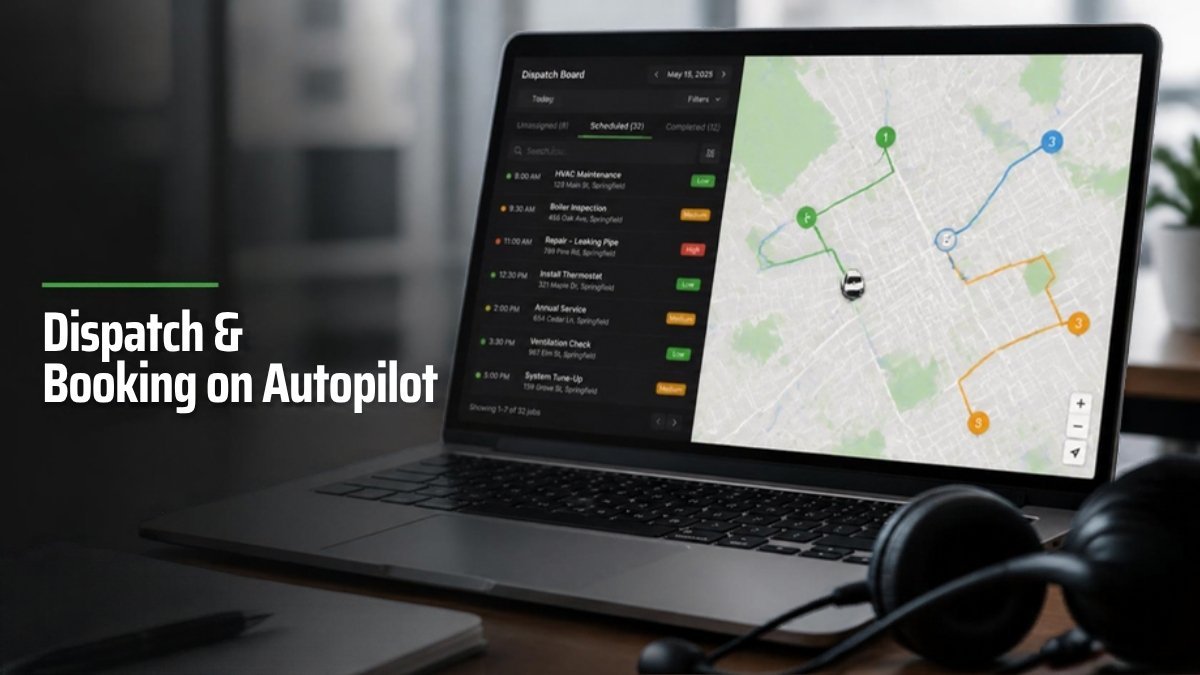
Quick answer: Salt Lake City plumbing companies win winter by answering every frozen and burst pipe call live, triaging by severity, and moving routine work into open slots. A trained virtual assistant can run that front office for about $12/hr, so your plumbers stay on jobs instead of on the phone.
- Cold snaps along the Wasatch Front can turn a quiet week into a flood of emergency calls overnight.
- A written triage script decides what gets dispatched now, what waits, and what the caller can do in the meantime.
- Pre-winter outreach (water heater flushes, hose bib and sprinkler winterization) fills October and November and reduces January emergencies.
- A virtual assistant answers, books, dispatches and follows up in your software during the hours you choose.
Every plumber in the Salt Lake Valley knows the pattern. The first real cold snap arrives, and by the next morning the phone is ringing nonstop: frozen lines in older homes on the east bench, a burst pipe in a rental in Sugar House, a sprinkler backflow that cracked in a West Valley yard. The plumbers who come out of winter with record revenue are not always the ones with the most trucks. They are the ones whose front office answers every call, sorts emergencies correctly, and keeps routine work flowing so nothing falls through the cracks.
This playbook walks through how Salt Lake City plumbing companies can set up their front office for freeze season, what to delegate to a virtual assistant, and the scripts and systems that keep the schedule profitable from November through March.
Why Winter Breaks the Typical Plumbing Front Office
Most small and mid-size plumbing shops run the office with one person, or with the owner answering calls between jobs. That works when call volume is steady. It fails in three predictable ways during a freeze:
- Calls stack up faster than one person can answer. When a dozen homeowners call within an hour, the ones who reach voicemail call the next plumber on Google.
- Emergencies get mixed with routine work. Without a triage process, a dripping faucet can get the 9 a.m. slot while an active leak waits until afternoon.
- Follow-up stops. Estimates for water heaters, repipes and sewer lines sit untouched because the office is buried in emergency calls, and that revenue quietly disappears.
The fix is not just more people. It is a clear process plus someone dedicated to running it. That is where a plumbing virtual assistant fits.
Step 1: Build a Three-Tier Triage Script
Your triage script is the single most valuable document in your winter office. It tells whoever answers the phone how to prioritize, and it protects your plumbers from being sent to the wrong job first. A simple version looks like this:
| Tier | Examples | What the VA does |
|---|---|---|
| 1. Active water damage | Burst pipe, water coming through a ceiling, no way to stop the flow | Walks the caller to the main shut-off using your script, dispatches or escalates to the on-call plumber immediately, and logs photos |
| 2. Frozen, no water | No water to part of the home, suspected frozen line, no visible leak yet | Books the earliest same-day slot, shares your approved safety guidance, and adds the caller to a priority callback list |
| 3. Routine | Slow drain, running toilet, water heater quote | Books into the next open routine slot and sets expectations clearly |
Two rules make this work. First, the VA never gives technical repair advice beyond the safety steps you approve, such as locating the shut-off valve. Second, every tier one call is escalated the same way every time, whether that means a phone call, a text to the on-call plumber, or a dispatch board alert.
Step 2: Start Pre-Winter Outreach Now
The best way to survive January is to do more work in October and November. A virtual assistant can call and text your past customers with a short list of seasonal services:
- Water heater flushes and anode checks, especially for tanks older than eight to ten years
- Hose bib and outdoor spigot winterization
- Sprinkler system blowouts and backflow preventer checks
- Inspections of exposed pipes in garages, crawl spaces and exterior walls
This outreach does two things. It fills the schedule during the shoulder season, and it reduces the number of preventable emergencies your crew faces once temperatures drop. Customers remember the company that called before the problem, not after.
Step 3: Protect High-Ticket Estimates During the Rush
Freeze season produces a lot of replacement opportunities. A frozen line in a 1950s home often reveals galvanized pipe that should be replaced. A failed water heater in January rarely gets repaired; it gets replaced. Those quotes are some of the most valuable work you will send all year, and they are exactly what gets ignored when the office is overwhelmed.
Assign estimate follow-up to your VA as a standing daily task. A simple cadence works well: a text the same day, a call on day two, an email with options on day four, and a final check-in on day seven. Your VA logs every touch in your field service software so you can see which quotes are warm.
Step 4: Keep Customers Informed Without Tying Up Plumbers
During a cold snap, the most common call is not a new job. It is an existing customer asking when the plumber will arrive. Each of those calls interrupts a technician if nobody else is managing communication. Your VA can send arrival-window texts, update customers when a job runs long, and reschedule routine visits proactively so tier one calls get the time they need.
Step 5: Handle the Paperwork That Winter Creates
Burst pipes often turn into insurance claims, and repipes or water heater replacements may require permits. Salt Lake City permits are handled through Salt Lake City Building Services, and plumbing contractor licensing in Utah runs through the Utah Division of Professional Licensing (DOPL). A VA can prepare permit applications from your notes, track inspection dates, collect photos and invoices for insurance files, and send homeowners the documents their adjuster requests. You stay responsible for the licensed work; the VA keeps the paper moving.
What a Winter Day Looks Like With a Virtual Assistant
- 6:30 a.m. Your VA reviews overnight voicemails and web forms, calls back tier one and two customers first, and builds the morning board.
- 8:00 a.m. Plumbers roll out with confirmed addresses, gate codes and customer notes already in the app.
- 10:00 a.m. A burst pipe call comes in. The VA walks the homeowner to the shut-off, alerts the closest plumber, and moves a routine drain job to the afternoon with a courtesy text.
- 1:00 p.m. Estimate follow-ups go out on yesterday’s water heater and repipe quotes.
- 4:00 p.m. Invoices go out for completed jobs, and review requests go to happy customers.
- 5:30 p.m. Tomorrow’s schedule is confirmed, and after-hours instructions are set for the on-call plumber.
What It Costs Compared With Hiring
The U.S. Bureau of Labor Statistics lists a 2025 median wage of $18.27 per hour for receptionists, before payroll taxes, benefits, equipment and turnover. A Go Hire Virtual General VA starts at $12/hr with no recruiting fees or long-term contract. For a full breakdown, see our VA vs. in-house hire cost comparison. Because we are based in South Salt Lake, Utah plumbers also get a local team managing their account. Learn more on our Salt Lake City virtual assistant page.
How to Get Started Before the First Hard Freeze
If you want a VA in place before winter peaks, start in the next few weeks. Most companies are matched in about one week, and our 30-day onboarding timeline shows what to hand off first. Phones and booking come first, triage scripts second, and estimate follow-up third. If you also run HVAC, our HVAC virtual assistant guide covers no-heat calls with the same approach.
Get a plumbing VA in place before the first freeze
Book a free 15-minute task audit. We will map the calls, scheduling and follow-up slipping through the cracks in your business and match you with a trained VA, usually in about one week. Pricing starts at $12/hr with no long-term contract.
Frequently Asked Questions
How can a Salt Lake City plumbing company handle more emergency calls in winter?
Set up a written triage script that separates active water damage, frozen lines and routine work, then have a dedicated person answer every call live. A virtual assistant can answer, triage, dispatch or escalate, and update customers during the hours you choose, so plumbers stay on jobs.
Can a virtual assistant give homeowners advice on frozen pipes?
A VA can share the safety steps you approve, such as locating and closing the main water shut-off, but does not give technical repair advice. Anything beyond your approved script is escalated to a licensed plumber.
What should plumbers do in October and November to prepare for winter?
Call past customers about water heater flushes, hose bib and sprinkler winterization, and exposed pipe inspections. This fills the shoulder season and reduces preventable emergencies in January and February.
How much does a plumbing virtual assistant cost in Salt Lake City?
Go Hire Virtual General VAs start at $12/hr and Professional VAs at $14/hr, with no recruiting fees or long-term contracts. Most plumbing companies are matched in about one week.
Can a virtual assistant help with plumbing permits and insurance paperwork?
Yes. A VA can prepare permit applications from your notes, track inspection dates, and organize photos, invoices and documents for insurance claims. The licensed contractor remains responsible for the work and filings.