
Key Takeaways: The 2027 HVAC Virtual Assistant Report
- The BLS projects HVAC technician jobs will grow 11% from 2025 to 2035, much faster than average, with about 40,600 openings a year.
- Median pay for HVAC techs reached $61,010 in 2025, so every hour a tech or owner spends on office work is expensive.
- A full-time in-house customer service rep costs an estimated $64,000 a year with benefits. In contrast, a full-time HVAC virtual assistant from Go Hire Virtual costs about $25,000.
- 88% of U.S. households use air conditioning, which is why summer call spikes overwhelm small offices.
- Refrigerant rules and the end of the federal heat pump tax credit mean more customer questions in 2027.
- HVAC companies delegate call answering, booking, dispatch support, estimate follow-up, maintenance plans and invoicing first.
Most HVAC companies do not lose jobs because their techs cannot fix the equipment. Instead, they lose them in the office. A call goes to voicemail during a July heat wave. An estimate never gets a follow-up. A maintenance agreement quietly lapses. That is why more owners are adding an HVAC virtual assistant to their team heading into 2027.
This report pulls together the latest public data on HVAC labor, office staffing costs, seasonal demand and regulation. Then it shows what that data means for how HVAC companies should staff the phones and the back office next year.
About This Report
Unlike our 2027 State of Virtual Assistance Report, this HVAC edition is not based on a new survey. Instead, it compiles published data from the U.S. Bureau of Labor Statistics (BLS), the U.S. Energy Information Administration (EIA), the IRS and the EPA. We then pair those numbers with Go Hire Virtual’s published pricing. Where we give an estimate, we show the math so you can check it against your own numbers.
The HVAC Labor Shortage Starts in the Field and Lands in the Office
According to the BLS, there were about 440,900 HVAC and refrigeration mechanic and installer jobs in 2025. Employment is projected to grow 11% from 2025 to 2035, which is much faster than average. As a result, the BLS expects about 40,600 openings each year.
In other words, good techs are hard to find and expensive to keep. The median HVAC tech earned $61,010 in 2025. So when a tech spends part of the day returning calls or chasing paperwork, that time comes straight out of billable work. The same goes for owners who still run the office from the truck.
What an HVAC Virtual Assistant Costs in 2027
Go Hire Virtual publishes its pricing up front. A General VA starts at $12/hr for call answering, booking, dispatch support and invoicing. Meanwhile, a Professional VA at $14/hr also handles bookkeeping, office management and marketing. There are no recruiting fees and no long-term contracts.
For example, a full-time General VA working 40 hours a week for 52 weeks costs about $24,960 a year. A part-time VA at 20 hours a week costs about $240 a week, which works well for owners who mainly need help during peak season.
HVAC Virtual Assistant vs. In-House CSR: The Real Cost
The BLS reports 2025 median pay of $44,770 a year for customer service representatives and $38,010 a year for receptionists. However, wages are only part of the cost. In private industry, benefits made up 30.0% of total employer compensation in June 2026, according to the BLS Employer Costs for Employee Compensation release.
| Role | Annual wages | Estimated total annual cost* |
|---|---|---|
| In-house customer service rep (BLS median) | $44,770 | About $64,000 |
| In-house receptionist (BLS median) | $38,010 | About $54,300 |
| Full-time HVAC virtual assistant (Go Hire Virtual General VA) | $24,960 | $24,960 (no benefits, payroll taxes or recruiting fees) |
*Estimate: median annual wages divided by 0.70, since wages were 70% of private-industry compensation in June 2026. Your actual costs will vary by market, benefits and overtime.
So even before you count desk space, equipment, overtime and turnover, a full-time HVAC virtual assistant costs well under half of a typical in-house hire.
Why Summer and Winter Peaks Overwhelm HVAC Offices
Demand for HVAC service is huge and seasonal. According to the EIA, 88% of U.S. households use air conditioning, and two-thirds use central AC or a central heat pump as their main equipment. So when the first heat wave hits, phones light up across an entire market at once.
That is exactly when small offices fall behind. The dispatcher is reshuffling the board, techs are booked solid, and new callers hear voicemail. Because homeowners with a broken AC rarely wait, an unanswered call often becomes a job for the next company on Google. A virtual assistant who answers and books during those peaks keeps that revenue in house.
New Rules Mean More Customer Questions in 2027
Two policy changes are also adding to call volume. First, under the EPA Technology Transitions rule, new residential and light commercial AC systems made or imported since January 1, 2025 must use lower-GWP refrigerants. As a result, homeowners have more questions about new equipment, refrigerants and pricing.
Second, the federal Energy Efficient Home Improvement Credit, which offered up to $2,000 a year for qualifying heat pumps, does not apply to equipment placed in service after December 31, 2025. Still, many customers will ask about it. A trained VA can answer those questions with your approved script and then route serious buyers to your comfort advisor.
The Tasks to Hand Off to an HVAC Virtual Assistant First
- Call answering and booking: answer inbound calls, texts and web leads, qualify the job, and book it on your calendar.
- Dispatch support: confirm arrival windows, update the board when jobs run long, and keep customers informed.
- Estimate follow-up: follow up on open replacement quotes by phone, text and email until the customer decides.
- Maintenance agreements: schedule seasonal tune-ups and renew memberships before they lapse.
- Invoicing and collections: send same-day invoices and polite reminders on overdue balances.
- Reviews: request a Google review after every completed job.
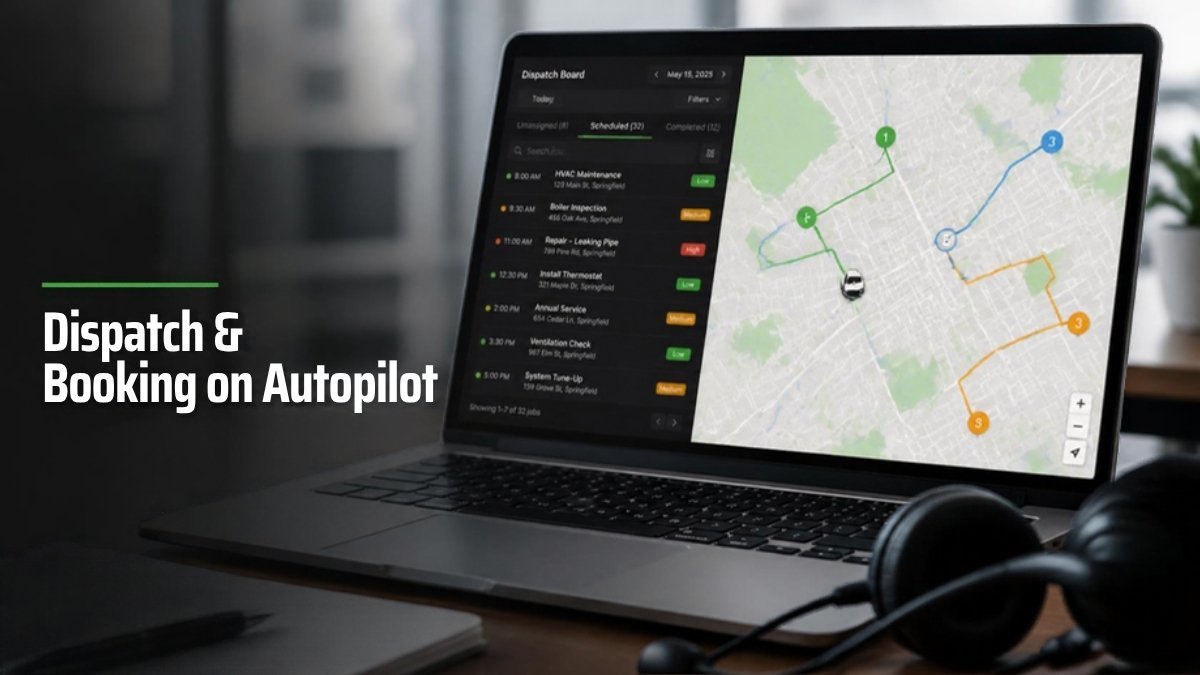
These tasks share a pattern. They are repeatable and time-sensitive, but they rarely need a licensed tech. That is why they are the first things HVAC owners delegate.
How AI Is Changing the HVAC Back Office
AI tools now show up in many field service platforms. They help draft messages, summarize call notes and organize data. However, AI still cannot calm down a homeowner with no heat in January or decide which job gets bumped. So the best setup in 2027 pairs a trained virtual assistant with AI tools. The VA handles judgment and customer care, while the software speeds up the busywork.
Common Concerns About Hiring an HVAC Virtual Assistant
Owners usually raise the same questions. Will the VA know our service area and pricing? Can they use our software? What about customer data? These are fair concerns. In practice, most are solved with a clear call script, a price book, and logins you control. Also, many owners start with one task, like after-hours call answering or estimate follow-up. Then they expand once the VA is up to speed.
What This Means for HVAC Companies in 2027
Put the data together and the picture is clear. Techs are scarce and well paid, so their time belongs in the field. Meanwhile, in-house office staff cost far more than their hourly wage suggests. Seasonal peaks, refrigerant changes and tax credit questions will also keep phones busy. As a result, an HVAC virtual assistant is one of the most cost-effective ways to answer every call, book more jobs and protect margins next year.
The Bottom Line
The HVAC companies that grow in 2027 will not just be the ones with the best techs. They will also be the ones that answer the phone, follow up on every estimate and keep maintenance customers coming back. If that is where your office is slipping, see how our home services virtual assistants work, or book a free 15-minute task audit.
Frequently Asked Questions About HVAC Virtual Assistants
How much does an HVAC virtual assistant cost in 2027?
Go Hire Virtual HVAC virtual assistants start at $12/hr for call answering, booking, dispatch support and invoicing. Professional VAs at $14/hr also handle bookkeeping and marketing. A full-time General VA costs about $24,960 a year, with no recruiting fees or long-term contracts.
Is an HVAC virtual assistant cheaper than an in-house CSR?
Usually, yes. The BLS median pay for customer service representatives was $44,770 in 2025. Once you add benefits, which made up 30% of private-industry compensation in June 2026, a full-time in-house CSR can cost around $64,000 a year.
Can an HVAC virtual assistant work in my field service software?
Yes. Your VA works inside your existing tools, such as Housecall Pro and other field service software, with logins you control.
What should HVAC companies delegate to a virtual assistant first?
Start with call answering and booking. Then add estimate follow-up, maintenance agreement renewals, dispatch support and invoicing.
Why is HVAC call volume so seasonal?
According to the EIA, 88% of U.S. households use air conditioning. Because heat waves and cold snaps hit whole markets at once, calls spike at the same time for every company in the area.